


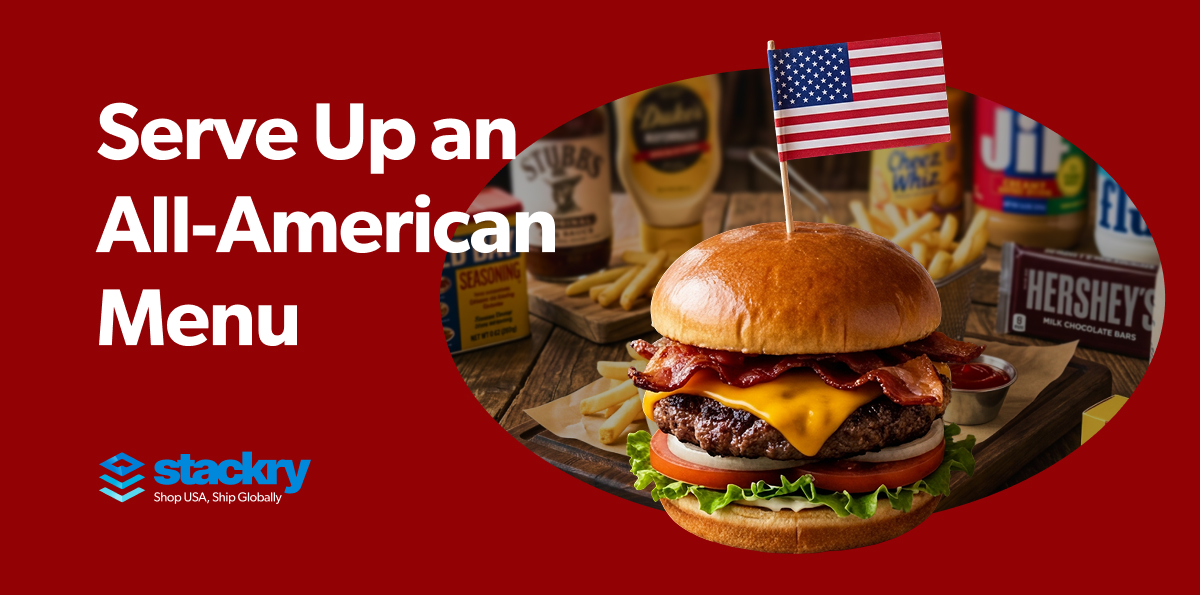
You can make a perfectly good burger almost anywhere, but making one that tastes like it came from an American diner is a whole other challenge.
If you run a burger bar, BBQ joint, dessert shop, bakery, food truck, cereal café, or American-themed venue outside the US, authenticity is part of what your customers are paying for. They don't expect every ingredient to have crossed the Atlantic, but they do expect the finished product to taste right.
If you want to gain a reputation for the best American menu outside of the States, then it's important that you get your sourcing right. Your local wholesaler can supply flour, sugar, meat, cheese, and plenty of other essentials perfectly well. But when your recipe calls for grits, graham crackers, Old Bay, marshmallow fluff, or a particular American BBQ sauce, the nearest local substitute might not give you the same result. The trick is knowing what matters, what doesn't, and what it's worth you going to the hassle and cost of sourcing and importing.
Start with what your customers will notice
An authentic American menu doesn't mean that you have to use an American version of every ingredient. Your customers aren't going to know whether the flour in their pancake batter was milled in Massachusetts, USA or Manchester, UK. Plus, importing something heavy and inexpensive that has an identical local equivalent makes no commercial sense. However, if you replace the ingredient responsible for the distinctive flavor or texture of a dish, you may be found out.
- A graham cracker base isn't quite the same as one made with digestive biscuits.
- Grits aren't interchangeable with every other ground-corn product.
- A particular BBQ rub can be fundamental to a regional BBQ style.
- And if you've promised a classic American sundae with Hershey's syrup, another chocolate sauce isn't necessarily going to deliver the same experience.
Before you start sourcing, divide your ingredients into two categories: the things that make the dish authentically American, and the things that simply make the dish. Then you can prioritize spending your importing budget on the first.
The American ingredients that are difficult to replace
No matter how much an online search will say that you can substitute one product for another, if you want your customers to experience the real deal (and keep coming back) there are some things that you might want to source without compromise. These include:
Old Bay
If you're serving Maryland-inspired seafood, crab cakes, fries, or a seafood boil, Old Bay isn't generic seasoning: its particular flavor profile is part of the dish. Of course, with a bit of research, you can make your own approximation, but if you're actively selling the American provenance of the food, using the recognizable original may be worth it.
Grits
Shrimp and grits without the right grits misses the point. For a Southern-inspired menu, authentic American grits can deliver the texture and flavor customers familiar with the dish expect, and "nearly the same" is just not good enough. You need the real thing, regardless of where you've sourced it.
Cheez Whiz
Nobody is importing Cheez Whiz because there isn't any cheese available locally. It's imported because, for certain American dishes, Cheez Whiz is the point. If you're offering a particular style of Philadelphia cheesesteak, for example, replacing it with an elegant homemade cheese sauce is going to make your version less authentic, no matter how delicious it is.
Marshmallow Fluff
Fluff crops up in American baking, desserts, milkshakes, toppings, and, of course, the classic Fluffernutter. Its particular consistency makes it difficult to replace directly with ordinary marshmallows or a generic marshmallow product, and for a dessert bar or bakery, it's also the sort of ingredient that can help make a recognizably American menu item feel different from what's available everywhere else.
Graham crackers
Cheesecake bases, s'mores, pie crusts, and countless American recipes call for graham crackers. International bakers often substitute digestive biscuits, and sometimes that's perfectly adequate, although the flavor and texture aren't identical. However, if you're selling an authentic American s'more, where the graham cracker is celebrated in its simplicity, anything else just won't be quite right.
American BBQ rubs and sauces
BBQ is where authenticity can really make a difference. Regional American BBQ traditions have their own flavor profiles, ingredients, and expectations; if your menu specifically promises Texas, Carolina, Memphis, or Kansas City-inspired BBQ, the sauce or rub is doing considerably more work than an anonymous bottle of "American-style BBQ sauce" from a local wholesaler.
Specific US rubs and sauces can therefore be good candidates for importing, particularly if they're integral to a signature dish. Shouting about what you use and where it's sourced from is a great opportunity to showcase your commitment to authenticity, too.
American pancake and biscuit mixes
American biscuits aren't British biscuits, and American pancakes aren't always quite the same as the pancakes you make from a generic local mix. Specialist American mixes can help small kitchens deliver a consistent product without developing every recipe from scratch; they're shelf-stable, predictable, and easy for kitchen teams to work with, which can make them particularly useful for brunch venues, diners, food trucks, and caterers.
Canned chili
Canned American chili can be useful for dishes where a recognizable US-style product is part of the finished result, from chili dogs to loaded fries. It's also shelf-stable, making it operationally easier than products requiring refrigeration. The downside to importing canned chili is its weight, which means you need to look particularly carefully at the landed cost before deciding whether it's worth importing.
Hershey's syrup
You can buy chocolate sauce locally but there is no way that it'll taste like Hershey's.
If your menu promises an American diner-style sundae or milkshake, using a recognizable American product can be part of the experience. And sometimes that's the point: authenticity isn't always about finding an ingredient that can't technically be substituted. It's about deciding when the original adds enough to justify using it.
Making the numbers stack up
Small independent food businesses occupy an awkward space: you may need more than the occasional jar or packet from an American import store, but nowhere near the quantities required to interest a major commercial importer or wholesaler. Local American-food distributors can be useful, but they understandably concentrate on products with higher levels of demand, which means that you may only have a fairly narrow range available and you may struggle to find niche brands.
Buying retail packs from specialist import stores is another option, but repeated retail markups can quickly damage your food cost. There are also US suppliers themselves, but some don't ship internationally at all and others are geared towards domestic wholesale accounts or commercial customers ordering at a much larger scale.
Small independents struggle to hit the sweet spot in terms of supply numbers; they may need 20 of an item a month, but won't be able to shift the minimum pallet order without wastage, and nor can they benefit from those economies of buying in bulk.
When it comes to the essential brands or items, you need to decide whether to import or to buy locally for a higher price. Don't compare the American shelf price with your local wholesaler's price: compare the landed cost per usable portion. That means you need to factor in the product price, any US domestic delivery, international shipping, applicable duties and taxes, and other relevant import costs, before working out what impact that has on your cost per dish.
A specialist American ingredient may look expensive once freight is included, but if you're only using a small amount in each serving, the additional cost per plate may be tiny while the impact on the finished product is substantial. Meanwhile, a heavy canned product where you're using most of the pack in every serving is a different proposition, because freight could transform an inexpensive US ingredient into a very expensive one. Ultimately, the question is whether the additional cost per portion is justified by the difference that authentic ingredient makes to the dish and to the experience you're selling.
Buy at scale and less often
Once you've identified the American products that earn their place on your menu, it makes sense to treat them as part of your regular procurement rather than scrambling to find another jar of sauce every time you're about to run out. Look at how much you're using each month, how long the products keep, and how much stock you can realistically hold, then develop a buying schedule that works for your business.
For some operators, that might mean a monthly order, while products with a longer shelf life and lower usage might be bought quarterly. The important thing is that you're planning several purchases together, rather than repeatedly paying to move individual orders from the US. This also gives you more freedom to shop around, because your grits, BBQ rubs, baking ingredients, and branded sauces don't necessarily need to come from the same supplier. There is obviously a point at which this model stops making sense: if you're using enough of a product to buy it by the pallet, a specialist commercial importer or direct wholesale relationship is likely to be a more appropriate solution. For a smaller independent that needs more than an occasional retail pack but nowhere near commercial import volumes, however, consolidating regular US purchases can fill that gap.
Consolidating US purchases with Stackry
This is where Stackry for Business can be particularly useful. You receive a US shipping address that you can use when ordering eligible products from American retailers and suppliers, which means that a business that won't ship internationally doesn't necessarily have to be crossed off your list.
Rather than forwarding each purchase as soon as it arrives, you can allow orders from different suppliers to arrive at Stackry before consolidating eligible products into a single international shipment. Repacking can also remove unnecessary retailer packaging, while a choice of carriers allows you to select the combination of cost and delivery time that works for your business. For an independent diner, BBQ restaurant, bakery, food truck, or dessert bar buying relatively modest quantities from several suppliers, this can make regular US sourcing much easier to manage.
It also means you can build your purchasing around what you need rather than around the limitations of one supplier. If your preferred BBQ rub comes from one store, your graham crackers from another, and the particular pancake mix you use from somewhere else, they can form part of the same planned US order rather than forcing you to compromise on the products you use.
Check what you can import before you buy
Shelf-stable American foods can be very different from fresh and perishable products when it comes to international shipping, but you still need to check that what you're buying is eligible before placing the order. Stackry's prohibited items include perishable goods, fresh food, and items requiring refrigeration, so the focus here is on eligible shelf-stable products such as the sauces, seasonings, mixes, crackers, and other ingredients we've covered above.
If you're importing food for use in a commercial business, you also have responsibilities beyond getting the parcel from the US to your door. Requirements vary by destination and can cover areas such as ingredients, allergens, labeling, food safety, and the commercial use or resale of imported products. Make sure you understand the rules that apply to your country and the products you're buying before you order, rather than assuming that something being shelf-stable automatically means that it can be imported and served commercially.
Keep buying the basics locally
Of course, putting on an authentic American menu doesn't mean you need to start importing your entire shopping list from the US. There is very little point paying international freight on flour, sugar, fresh produce, dairy, or other ingredients when you can source an equivalent product locally, often for less, and with considerably less hassle.
Instead, save your importing budget for the products where the difference is meaningful. If digestive biscuits work perfectly well for a cheesecake that isn't being sold as authentically American, use them, but if s'mores are one of the signatures of your American dessert menu, genuine graham crackers have a much stronger case. The same principle applies to everything from sauces and seasonings to pancake mixes and grits, because authenticity comes from knowing which details matter rather than simply importing as much as possible.
Build a menu people remember
For a small independent food business, creating an authentic American menu outside the US is ultimately about making smart choices. Your customers probably don't care where you bought the flour, butter, or sugar, but they may well care that the shrimp and grits actually taste like shrimp and grits, the Philadelphia cheesesteak has the ingredients they expected, and the s'mores aren't simply digestive biscuits with marshmallows.
Work out which products genuinely make a difference, calculate whether the landed cost works within your margins, and plan your US sourcing so that you're buying sensible quantities at sensible intervals. Where an eligible product isn't readily available locally or the US supplier won't ship internationally, parcel forwarding and consolidation can give a smaller business another sourcing option without pretending to be the right solution once you're buying at pallet scale.
Creating a memorable, authentic American menu doesn't mean that you should import every single ingredient from America, but by choosing your showstoppers wisely and prioritizing importing only what is financially viable and noticeably different, you'll be able to give your customers an experience that they'll remember for all the right reasons.


%401x.svg)